You click a button on a website. The form is processed. The item is placed in your shopping cart. This may seem like a smooth process, but when you make that one click, two distinctly different levels of technology interact.
That’s the world of web development. And at the heart of it sits one of the most common questions in tech: What’s the difference between frontend and backend development?
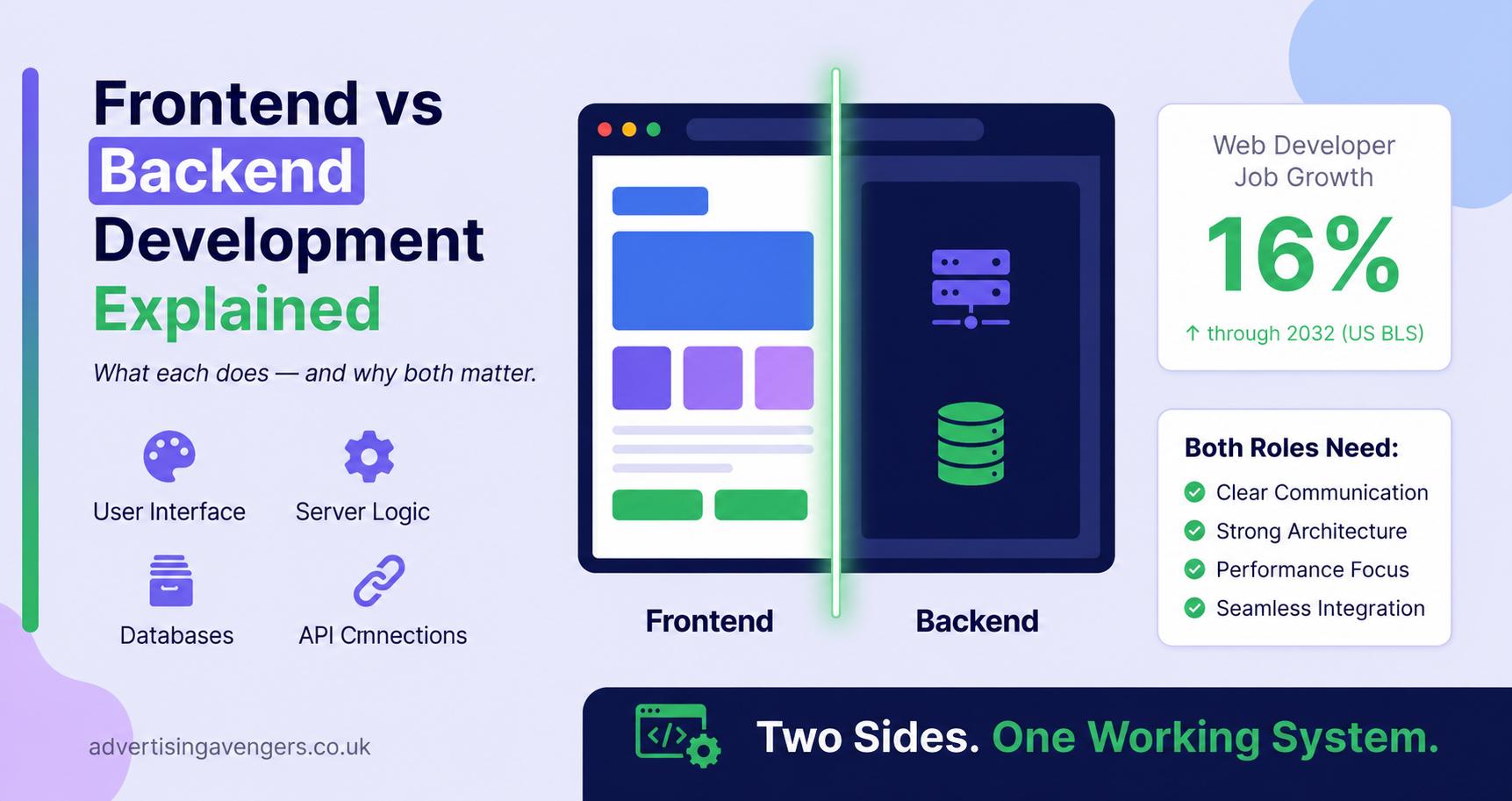
If you’re a business owner, a startup founder, or someone just starting to explore the web development process, understanding this distinction can save you time, money, and a lot of confusion. According to the U.S. Bureau of Labor Statistics, web developer jobs are expected to grow 16% through 2032, much faster than average. Clearly, this field matters, and so does knowing how it works.
Let’s break it down clearly.
What Is Frontend Development?
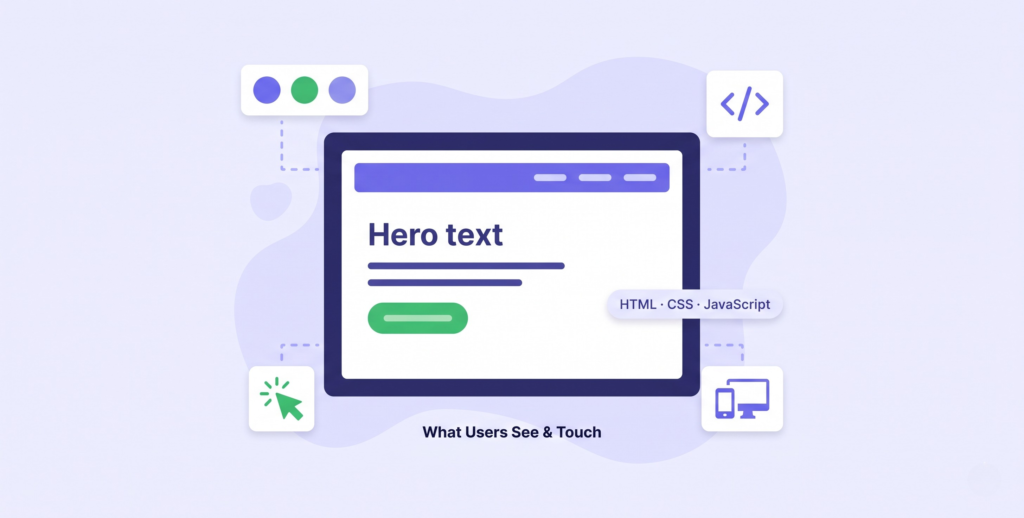
The frontend refers to everything that the user experiences firsthand. It represents the interface of the website or application that they can see. This can be described by elements such as layout, colors, buttons, forms, and navigation bars.
When you land on a homepage, and everything looks polished and easy to use, that’s the result of skilled Frontend Development Services at work.
Frontend developers typically work with:
- HTML for the structure of a page (headings, paragraphs, links)
- CSS for the styling (fonts, colors, spacing)
- JavaScript for functionality (animations, dynamically generated content, real-time feedback)
Besides, modern frontend technologies like React, Vue.js, and Angular enable the creation of high-performance websites.
The fundamental principle behind frontend development is easy to grasp – create something intuitive, fast, and aesthetically pleasing. If the user has difficulties finding a certain button on your website or it loads too slowly, you have a frontend issue.
What Is Backend Development?
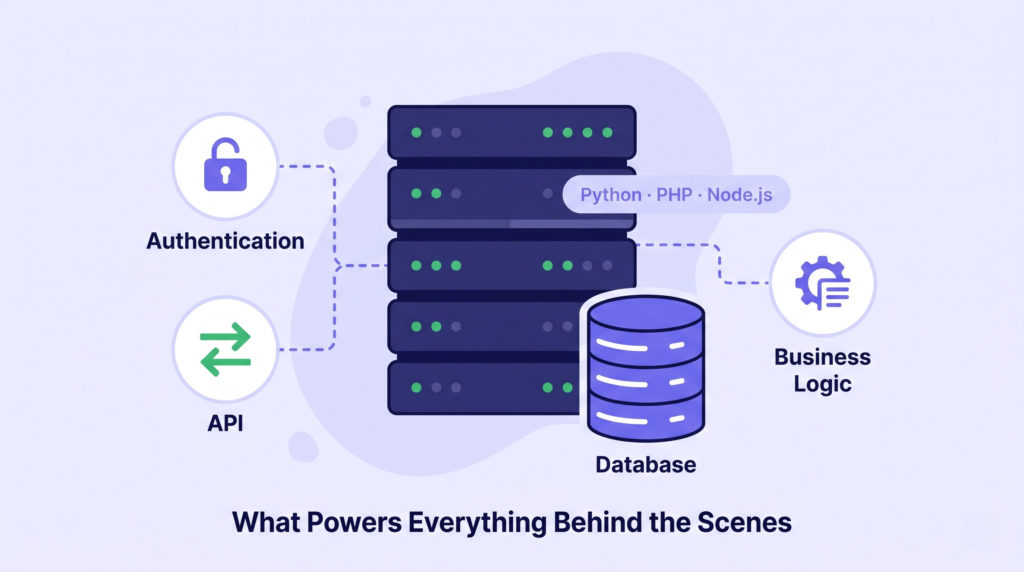
Backend development is everything happening behind the scenes. It’s the engine under the hood, invisible to the user but absolutely essential to how the site functions.
Backend Development Services handle things like:
- Databases where information related to users, products, and orders is stored and retrieved
- Servers where requests and responses take place
- APIs that help various software programs communicate with each other
- Authentications, such as managing login and session details
- Business logic, which refers to the rules that govern the application
Common backend languages include Python, PHP, Ruby, Java, and Node.js. Databases like MySQL, PostgreSQL, and MongoDB are also standard tools in a backend developer’s kit.
When you log into an account and your previous orders appear instantly, that’s backend logic running smoothly.
Frontend Developer vs Backend Developer: Key Differences
Understanding the frontend developer vs. backend developer distinction goes beyond simply saying one is visual and the other is not. Here is a clearer way to look at it.
The frontend developer specializes in building the user interface and experience. The developer uses HTML, CSS, and JavaScript. The toolkit for such developers involves using React, Vue, and Angular. The objective of a frontend developer is to ensure that the user has the best possible experience with the application.
The role of the backend developer is to work with servers, databases, and business logic. Languages like Python, PHP, Java, and Node.js are used by these kinds of developers.
Both roles are critical. A beautiful website with broken logic is unusable. A perfectly functional backend with a poor interface will drive users away.
How Do They Work Together?
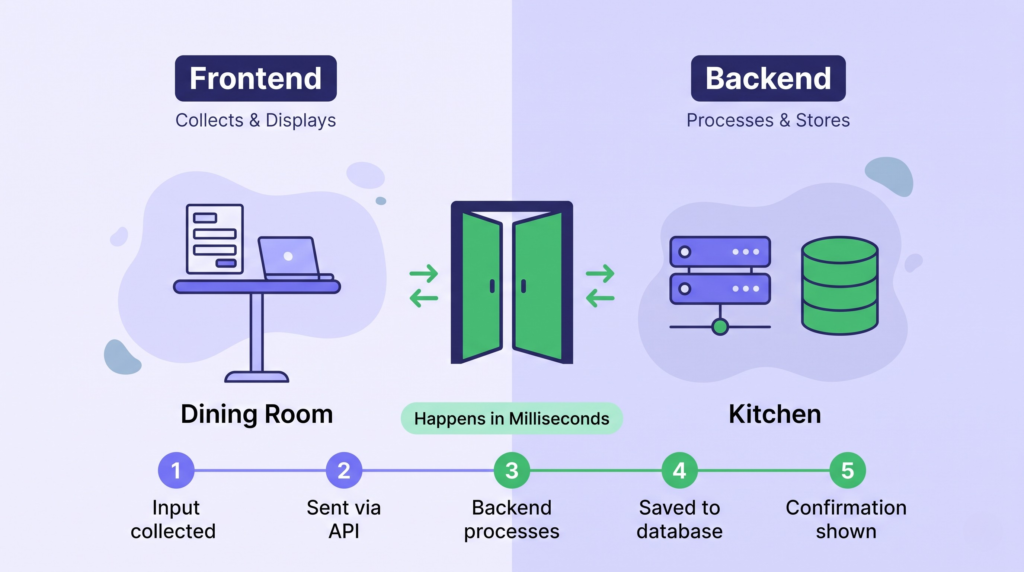
The web development process almost always involves both frontend and backend working in sync. Think of it like a restaurant. The frontend is the dining room, which guests see and experience. The backend is the kitchen, where all the real work happens out of sight.
When a user fills out a contact form, here is what actually happens:
- The frontend collects the input and checks it for errors.
- The data is sent to the backend through an API call.
- The backend processes the request and saves it to a database.
- A confirmation response is sent back to the frontend.
- The user sees a success message on screen.
This entire process happens in milliseconds. Neither side works well without the other.
Full-Stack Development: Bridging Both Worlds
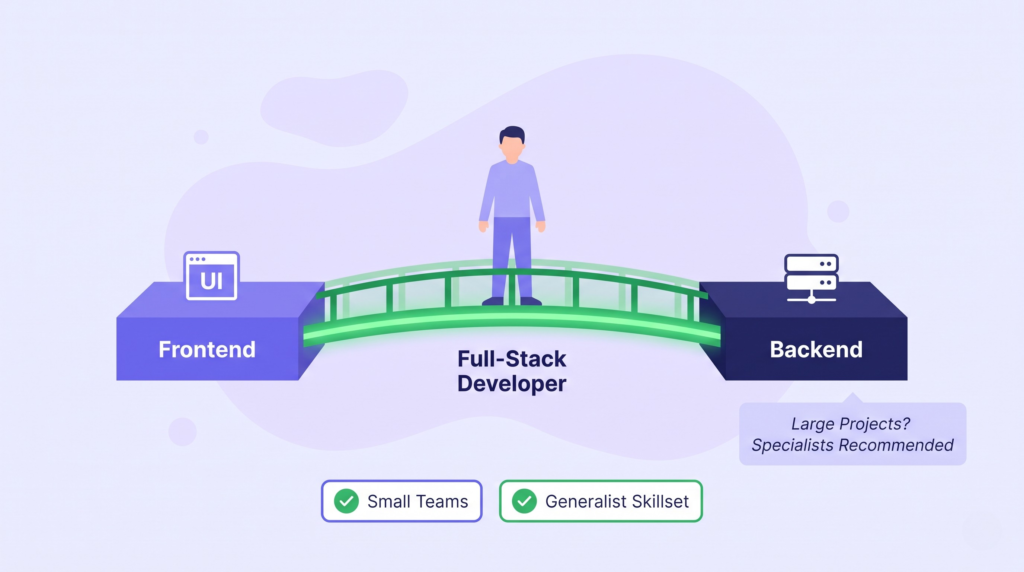
You may have heard the term “full-stack developer” in your modern days of web development. This describes an individual who develops on both the front-end and back-end levels. The individual is considered a generalist who creates a system from start to end.
A full stack developer may be ideal for small companies since they cut down on hiring different specialists to carry out various functions. But for large or intricate projects, dedicated front-end and back-end developers might be more ideal.
Which One Does Your Project Need?
Here is a simple way to think about it:
- Need a landing page or marketing website? That is front-end-focused work.
- Building a login system or e-commerce backend? That requires backend development.
- Launching a full web application? You need both, or a full-stack team.
Partnering with a team that offers complete Web Development Services is often the smartest move for businesses that want a reliable, scalable product without managing multiple vendors.
Why This Distinction Matters for Business Owners
Many businesses make the mistake of hiring the wrong type of developer for their needs. If you need a complex database and payment processing system, a designer who only knows HTML and CSS will not get you there. Equally, a backend engineer may not be the right person to craft a smooth, easy-to-use interface.
Knowing the difference helps you:
- Ask the right questions during the hiring process.
* Make proper timelines for the project.
* Budget accordingly.
* Save on expenses in the long run.
Final Thoughts
Frontend and backend development are two sides of the same coin. One creates the experience users love. The other makes sure everything runs without a glitch.
Whether you are building a simple business website or a full-scale web application, understanding these two disciplines puts you in a much stronger position as a client, a collaborator, or someone building a career in tech.
The modern web does not run on a single layer. It runs on both, working together seamlessly.