
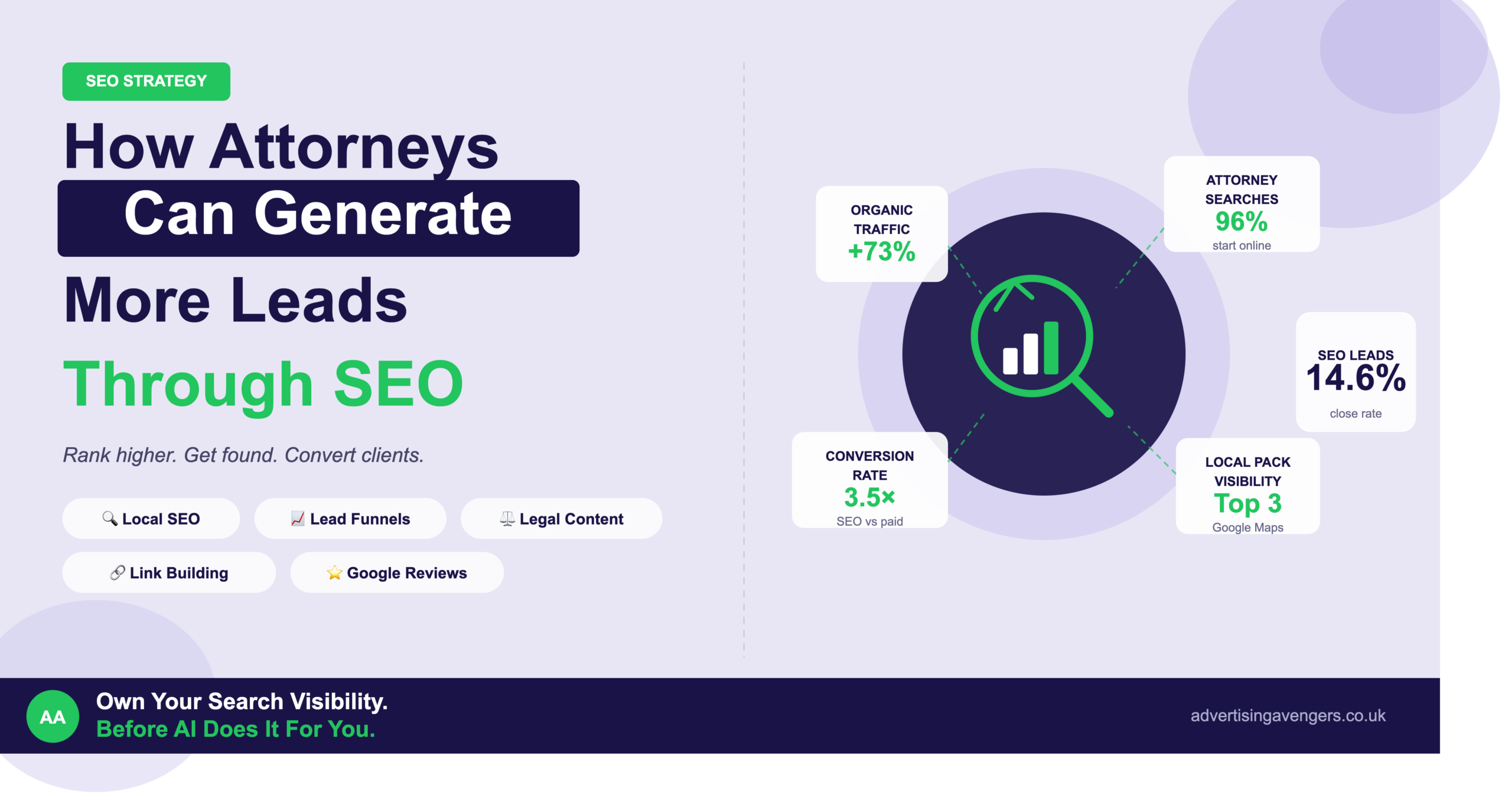
In the ultra-competitive legal market of 2026, finding a predictable and consistent way to acquire new clients is a top priority for growing practices. Traditional outbound marketing methods, like print advertisements, regional billboards, and cold television broadcasting, continue to drop in effectiveness as consumer behaviors move decisively toward on-demand digital discovery. Today, when individuals face complex business disputes, unexpected personal crises, or severe injuries, their immediate instinct is to consult a search engine to discover reliable, authoritative legal counsel. If your law practice does not rank prominently on the first page of search results, you are effectively giving away perishable, highly profitable legal cases directly to tech-savvy local competitors who have mastered targeted digital visibility.
Generating leads through search engine optimization is no longer just about filling web pages with repetitive search phrases; it requires a sophisticated framework that balances top-tier technical site performance, genuine legal authority, and an intimate understanding of modern user intent. To build long-term business resilience and scale your practice caseload, your firm must deploy an intentional, data-driven organic marketing blueprint that aligns perfectly with contemporary online research habits. This actionable guide outlines the five foundational tactics successful law firms utilize to maximize lead acquisition right now.
Maximizing Local SEO and Map Pack Prominence
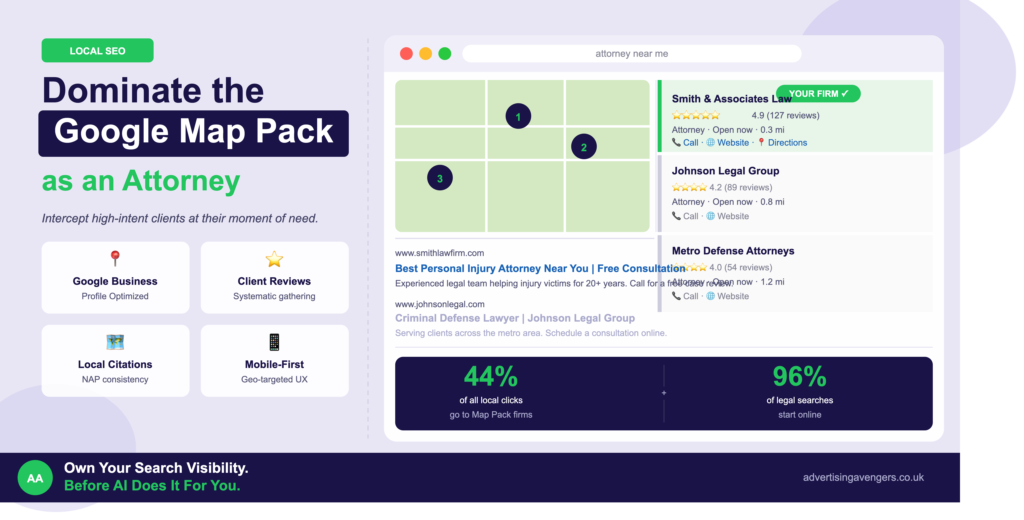
The absolute cornerstone of any successful attorney lead generation campaign is local optimization, specifically dominating the Google Map Pack. When individuals require urgent local legal assistance, their searches are highly geographically targeted, meaning they seek out proximate firms that can handle their cases immediately. To fully capitalize on this high-intent search behavior and streamline your client acquisition pipelines, collaborating with specialized legal marketing agencies like Click Typhoon can provide the expert analytical support required to capture elite map pack rankings quickly.
Optimizing your Google Business Profile with precise category labels, accurate operating hours, and comprehensive local citations signals clear geographical relevance to automated search crawlers. As shown in the local map pack diagram above, visual prominence on a tablet or smartphone layout drives immediate engagement. Furthermore, establishing a systematic workflow to gather authentic, positive reviews from satisfied clients within your primary community drastically enhances your local search engine visibility over time. This proactive local positioning effectively intercepts active prospects at their exact moment of need, funneling highly qualified digital inquiries straight to your intake team.
Targeting High-Intent and Conversational Keywords
Generating high-quality legal leads requires a shift from chasing broad, highly competitive search terms to targeting specific, long-tail transactional phrases. Instead of optimizing solely for generic keywords like “defense lawyer,” modern practices must focus on exact queries such as “how to hire a commercial litigation attorney near me.” These granular phrases possess immense conversion potential because they are utilized by individuals actively ready to retain legal representation rather than those casually browsing for general definitions.
Furthermore, with the exponential rise of voice search and mobile dictation, search queries have become significantly more conversational and question-based. Attorneys should perform comprehensive keyword mapping to identify the precise terminology, localized phrasings, and situational problem statements their ideal clients input during stressful moments. Structuring your content to directly answer these highly tailored queries allows your firm to consistently match specific user intent, significantly boosting click-through metrics and maximizing high-conversion lead generation performance across all practice areas. Using the right free keyword research tools can help attorneys uncover these high-intent local phrases quickly.
Establishing Deep E-E-A-T and Topical Authority
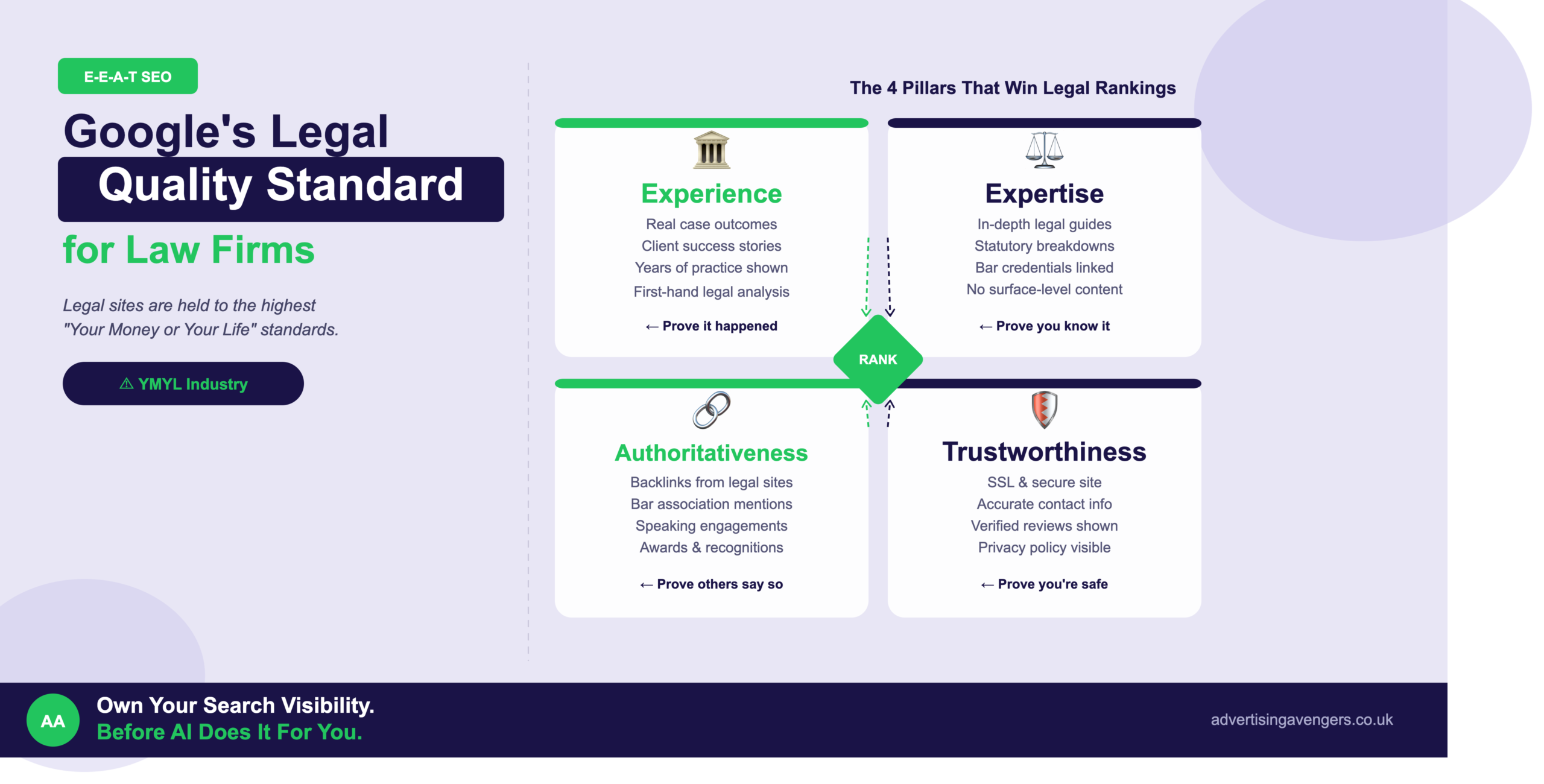
Because search engine algorithms process legal websites under stringent “Your Money or Your Life” quality standards, showcasing absolute professional integrity and expertise is non-negotiable for lead generation. Google demands verifiable proof of Experience, Expertise, Authoritativeness, and Trustworthiness before rewarding law firms with dominant, high-traffic organic visibility. Attorneys must move completely away from publishing generic, surface-level articles and instead focus on developing exhaustive topical libraries that solve real problems.
Crafting in-depth legal analyses, step-by-step statutory guides, and detailed breakdowns of complex case files establishes your platform as an undeniable primary source. Every piece of educational material should feature robust author profiles complete with active links to verified state bar credentials, professional rewards, and speaking engagement histories. This meticulous dedication to E-E-A-T compliance satisfies automated ranking algorithms while reassuring apprehensive, vulnerable prospects that your law office possesses the sophisticated, hands-on legal acumen necessary to champion their complex claims successfully and protect their rights.
Optimizing User Experience and Technical Conversions
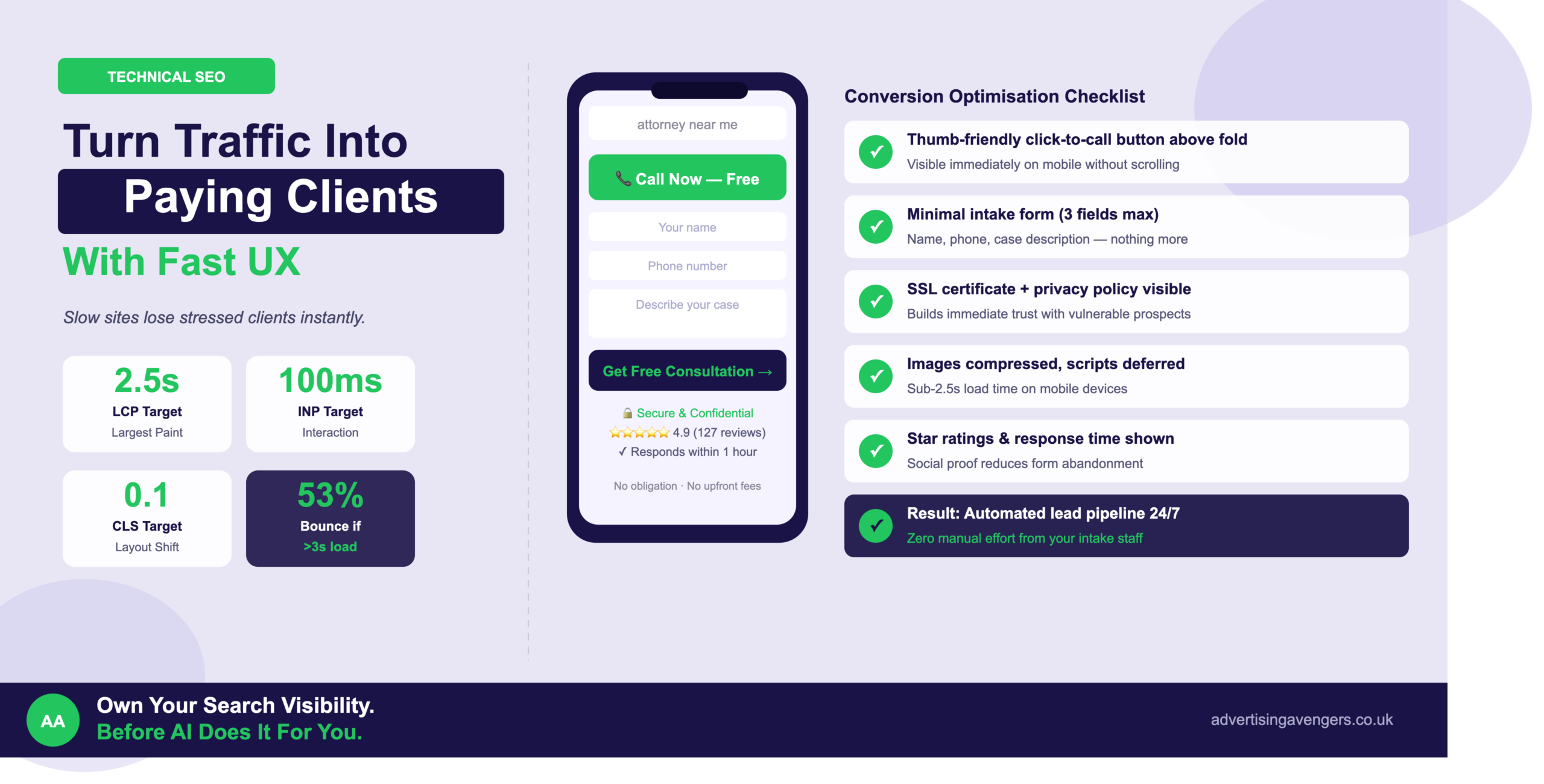
Attracting substantial organic search traffic to your law firm’s website is an incomplete victory if technical obstacles or convoluted layouts prevent visitors from converting into actual leads. Modern technical search engine optimization focuses heavily on Core Web Vitals, which measure asset rendering speeds, mobile responsiveness, and visual layout stability. Legal platforms must load instantly, as prospective clients experiencing immediate stress will quickly abandon slow-loading pages, causing bounce rates to skyrocket.
Attorneys must streamline their mobile conversion architectures by placing highly accessible, thumb-friendly contact methods, click-to-call buttons, and simple intake forms prominently on every landing page. Eliminating unnecessary form fields, minimizing heavy scripts, and embedding secure encryption protocols ensure a safe, frictionless browsing experience. By prioritizing clean navigation pathways that align directly with human psychology, your firm can systematically transform incoming traffic into a structured pipeline of hot, verifiable client leads with minimal manual effort from your staff.
Harnessing Video SEO for Dynamic Engagement
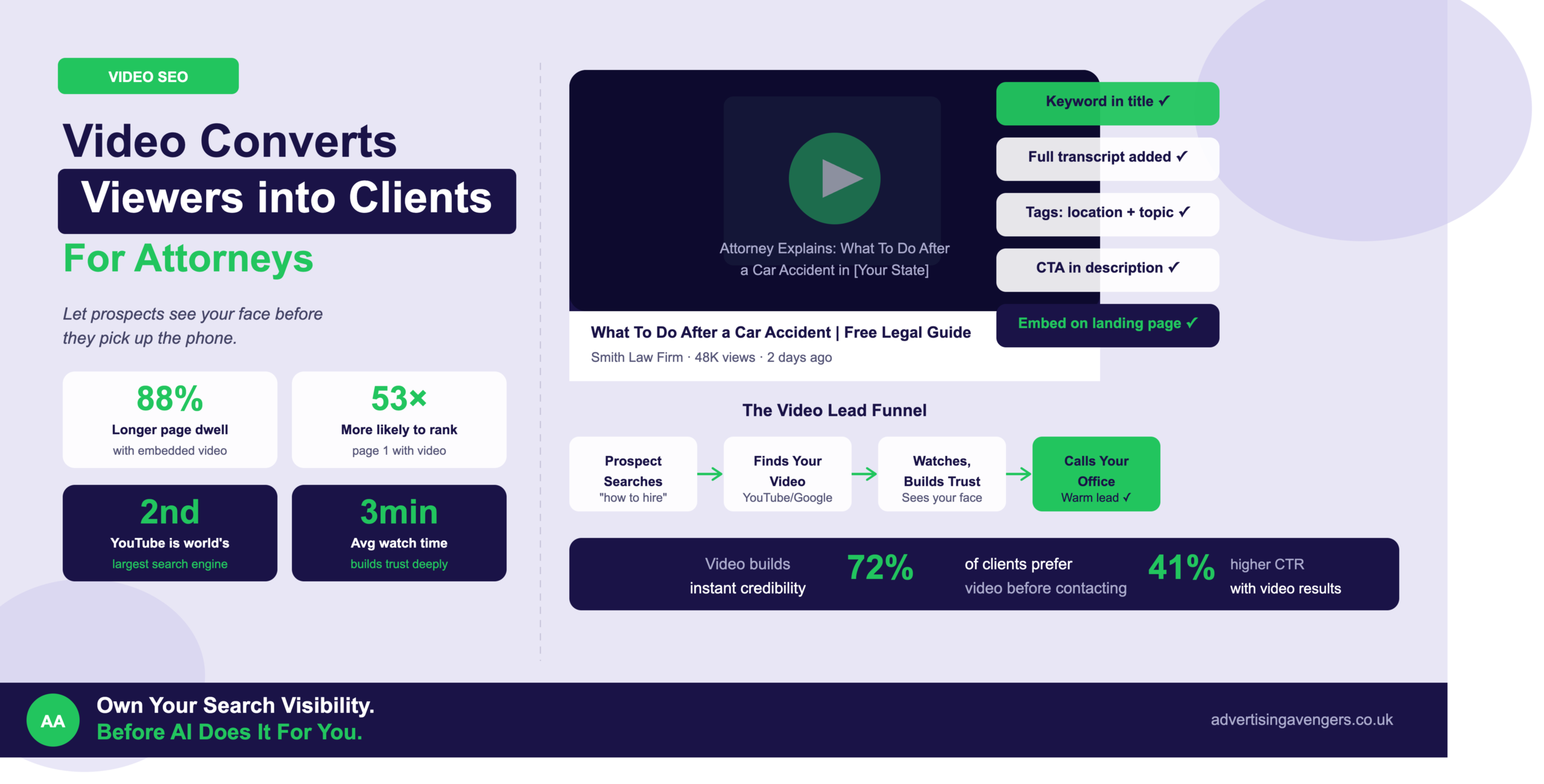
Video marketing has established itself as an absolute powerhouse for legal lead generation, driven by contemporary search engine integration of rich multimedia assets. Producing informative, high-quality video content that details common legal dilemmas, simplifies intricate claims processes, and shares impactful success stories significantly deepens engagement. To extract maximum search value, attorneys must optimize these visual assets by embedding precise transactional keywords within descriptive video titles, tags, and complete audio transcripts.
Publishing these materials on platforms like YouTube while embedding them directly into dedicated landing pages markedly elevates user dwell time metrics. This extended interaction signals premium content value to crawling algorithms, raising your organic positions across standard search layouts. More importantly, video allows vulnerable prospects to look into an attorney’s eyes, hear their voice, and evaluate their personal dedication before initiating contact. This powerful visual connection systematically tears down consumer skepticism, transforming passive views into active phone calls quite effectively.
Final Thoughts
Generating more client leads through digital channels requires a patient, holistic investment in a modern search visibility framework.
Attorneys cannot afford to rely on isolated or outdated marketing tactics; instead, they must build a cohesive ecosystem that balances fast technical load speeds, localized geographic presence, and deeply authoritative, educational content. By explicitly aligning your online assets with specific search intent and prioritizing seamless user experiences, your law firm creates an automated client acquisition engine that runs continuously. Ultimately, executing a well-structured optimization campaign transforms your website into an invaluable firm asset, insulating your business from market fluctuations and ensuring long-term profitability. Pairing your content strategy with a strong link building approach further accelerates your domain authority and visibility.
Frequently Asked Questions
1. How long does it take for an attorney to see new leads from an SEO campaign?
Generally, a comprehensive search engine optimization strategy requires four to six months to show significant ranking improvements and consistent inbound lead generation. SEO functions as a compounding, long-term asset that requires strategic patience rather than instantaneous results.
2. What is the difference between local map optimization and standard organic search optimization?
Standard organic SEO focuses on ranking informational articles and practice pages globally or state-wide on the main search results. Local SEO specifically targets geographic-specific queries, optimizing your Google Business Profile to capture immediate client inquiries via the Google Map Pack.
3. Why do search engine algorithms penalize thin or duplicated legal content?
Search engines apply strict quality protocols to the legal sector because inaccurate data can negatively influence a user’s future well-being. Thin or copied content lacks authority, failing to meet E-E-A-T parameters, which results in suppressed visibility.
4. How do mobile technical performance metrics directly impact my firm’s lead acquisition?
A large portion of urgent legal searches originate from mobile smartphones. If your platform loads slowly or features awkward mobile alignments, users experiencing immediate stress will instantly bounce off your page, destroying potential client conversion opportunities.
5. Can my law practice rank in nearby cities where we do not maintain a physical office?
While you can rank organically by building hyper-local geographic landing pages, appearing in the Google Map Pack requires a legitimate, verifiable physical address within that specific municipality to satisfy proximity ranking rules.