Are you reaching your customers where they actually spend time? Are you really showing up where your customers are, or just hoping they’ll find you somehow? That’s a tough question. But it’s an important one.
Many e-commerce businesses start with excitement. A store goes live. Products are uploaded. Ads are launched. And then silence. Traffic trickles in. Sales feel random. Growth is slow. Confusing, even. The problem usually isn’t the product. It’s visibility.
Today’s online shoppers live everywhere at once. Google searches in the morning. Instagram scrolling at lunch. YouTube reviews at night. Emails before bed. If your brand only appears in one place, you’re invisible everywhere else.
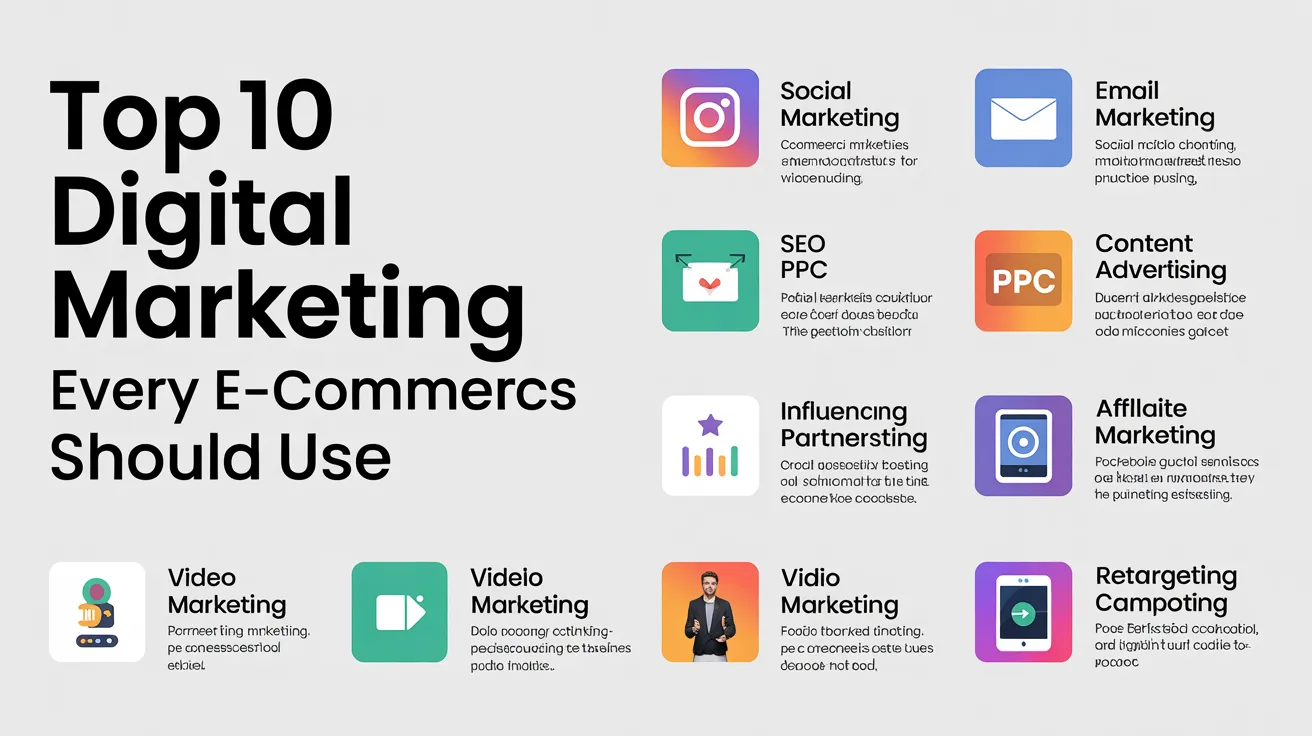
Digital marketing isn’t about doing more. It’s about showing up smarter. Below are the top 10 digital marketing channels every e-commerce business should use, not as isolated tactics, but as parts of one connected story. A story where your brand meets customers at the right moment again and again.
1. Search Engine Optimization (SEO)
SEO is quiet. Almost boring. But powerful. It doesn’t shout like ads. It doesn’t beg for attention. It waits. Then works. When someone types a problem into Google, they’re already interested. They want answers. Or products. Or both. SEO puts your store right there, at the exact moment intent is highest.
Product pages optimized with real keywords. Category pages that actually explain something. Blog content that helps instead of sells. It all adds up. Traffic grows slowly at first. Painfully slow. Then one day, it clicks. Rankings improve. Sales start coming in without paying for every visitor. That’s the magic. Slow, steady, dependable. SEO is not optional. It’s the foundation. Skip it, and everything else feels harder than it should.
2. Pay-Per-Click Advertising (PPC)
PPC is the opposite of SEO. Fast. Loud. Immediate. You launch a campaign. Ads go live. Traffic arrives the same day. Sometimes in the same hour. It feels good. Dangerous, too.
Google Ads, shopping campaigns, retargeting banners. They work. When managed properly. When not, budgets disappear fast. The beauty of PPC is control. You choose the keywords. The audience. The spend. You can test products quickly. Kill what doesn’t convert. Scale what does.
Smart e-commerce brands use PPC like a spotlight. Shining it exactly where profits live. No guesswork. Just numbers. And constant tweaking.
3. Social Media Marketing
Social media is messy. Emotional. Distracting. And incredibly effective. People don’t open Instagram to shop. They open it to escape. To laugh. To feel inspired.
Your job is to fit naturally into that moment. Not every post should sell. Most shouldn’t. Behind-the-scenes clips. Relatable memes. Customer stories. Quick product demos. Sometimes polished. Sometimes raw. That mix matters.
Platforms change fast. Algorithms shift. Trends come and go. But the core stays the same. Connection first. Sales later. Brands that treat social media like a billboard usually fail. The ones that treat it like a conversation win.
4. Email Marketing
Email feels old. It’s not. It’s personal. Direct. Quietly powerful. Someone gave you their email. That means trust. Please don’t waste it. Welcome emails that feel human. Cart reminders that don’t feel desperate. Promotions that actually make sense. This is where loyalty is built.
Email doesn’t depend on algorithms. Or rented audiences. You own it. Sales from email often surprise people. They shouldn’t. It reaches customers who already know you, already like you. Maybe even waiting for a reason to buy again. Used right, email marketing becomes your safety net when ads fail. When the reach drops. Email still works.
5. Content Marketing
Content is how brands explain themselves without explaining. A blog post answering a common question. A guide that saves someone hours of research. A comparison that feels honest, not salesy. That’s content marketing at its best.
It builds trust slowly. Almost invisibly. Customers arrive already convinced. Already educated. Already warm. Good content also fuels everything else. SEO improves. Social posts get easier. Emails have more to say. Not every article will go viral. That’s fine. Most shouldn’t. They need to help one person at the right time. That’s enough.
6. Video Marketing
Video changes everything. People don’t want to read instructions anymore – they want to see how it looks, how it works, how it feels. That’s why learning how to make a marketing video matters more than ever. A short demo can answer ten questions instantly. A simple clip builds confidence faster than paragraphs ever could.
For e-commerce stores, video on product pages makes a real difference. Especially when shoppers can’t touch the product, a single product video for WooCommerce can reduce hesitation and increase conversions without saying a word. Video doesn’t have to be perfect. In fact, being too polished can feel fake. Real hands. Real voices. Real use cases. That’s what converts.
7. Influencer Marketing
Influencers already have what brands want. Attention. Trust. Community. Borrowing that trust works. When done right. Not all influencers are celebrities. And that’s a good thing. Smaller creators often have stronger relationships with their audience. More engagement. More belief.
A genuine recommendation beats a scripted ad every time. The key is alignment. Same values. Same audience. Same tone. When it fits, it feels natural. When it doesn’t, everyone notices. Influencer marketing isn’t about control. It’s about collaboration.
8. Affiliate Marketing
Affiliate marketing is quiet. But steady. Partners promote your products. You pay only when a sale happens. Simple. Fair. Efficient. Bloggers writing reviews. Deal sites share offers. Content creators linking naturally. It all adds up over time.
There’s less control over messaging. That’s the trade-off. But the upside is scale without upfront cost. With proper tracking and clear commissions, affiliate programs can become long-term growth engines. Not flashy. Just consistent. Sometimes that’s better.
9. Marketplace Marketing
Marketplaces are crowded. Competitive. Fee-heavy. And still worth it. Customers trust platforms like Amazon instantly. That trust transfers to your product, especially for new brands.
Marketplaces are discovery tools. Testing grounds. Volume drivers. Many shoppers find brands there first. Then later buy directly. That’s fine. That’s strategy. You don’t need to love marketplaces. You need to use them wisely.
10. Conversion Rate Optimization (CRO)
Traffic is expensive. Wasting it hurts. CRO focuses on what happens after the click. Page speed. Layout. Copy. Checkout flow. Small details. Tiny changes matter. A button color. Fewer form fields. Better images.
Even a short WooCommerce product video in the right spot can increase trust instantly. CRO doesn’t feel exciting. Until revenue jumps without spending more, that’s when it clicks.
How These Channels Work Together
None of this works alone. That’s the truth. SEO brings visitors. PPC accelerates growth. Social builds connection. Email nurtures loyalty. Content educates. Video convinces. Influencers amplify—affiliates scale. Marketplaces expand reach. CRO maximizes everything.
It’s a system. Not a checklist. When one channel struggles, another supports it. When all align, growth feels smoother. Predictable. Sustainable. That’s the goal.
Conclusion
E-commerce isn’t getting easier. Competition grows daily. Attention spans shrink. Costs rise. But opportunity is still everywhere. The brands that win aren’t everywhere randomly. They’re everywhere intentionally.
By using these ten digital marketing channels together, not perfectly but consistently, e-commerce businesses build something stronger than short-term sales. They build presence. Trust. Momentum.
Start small. Improve steadily. Test often. Adjust without panic. Digital marketing isn’t about hacks. It’s about showing up. Again. And again. Where your customers already are.ting isn’t about hacks. It’s about showing up. Again. And again. Where your customers already are.