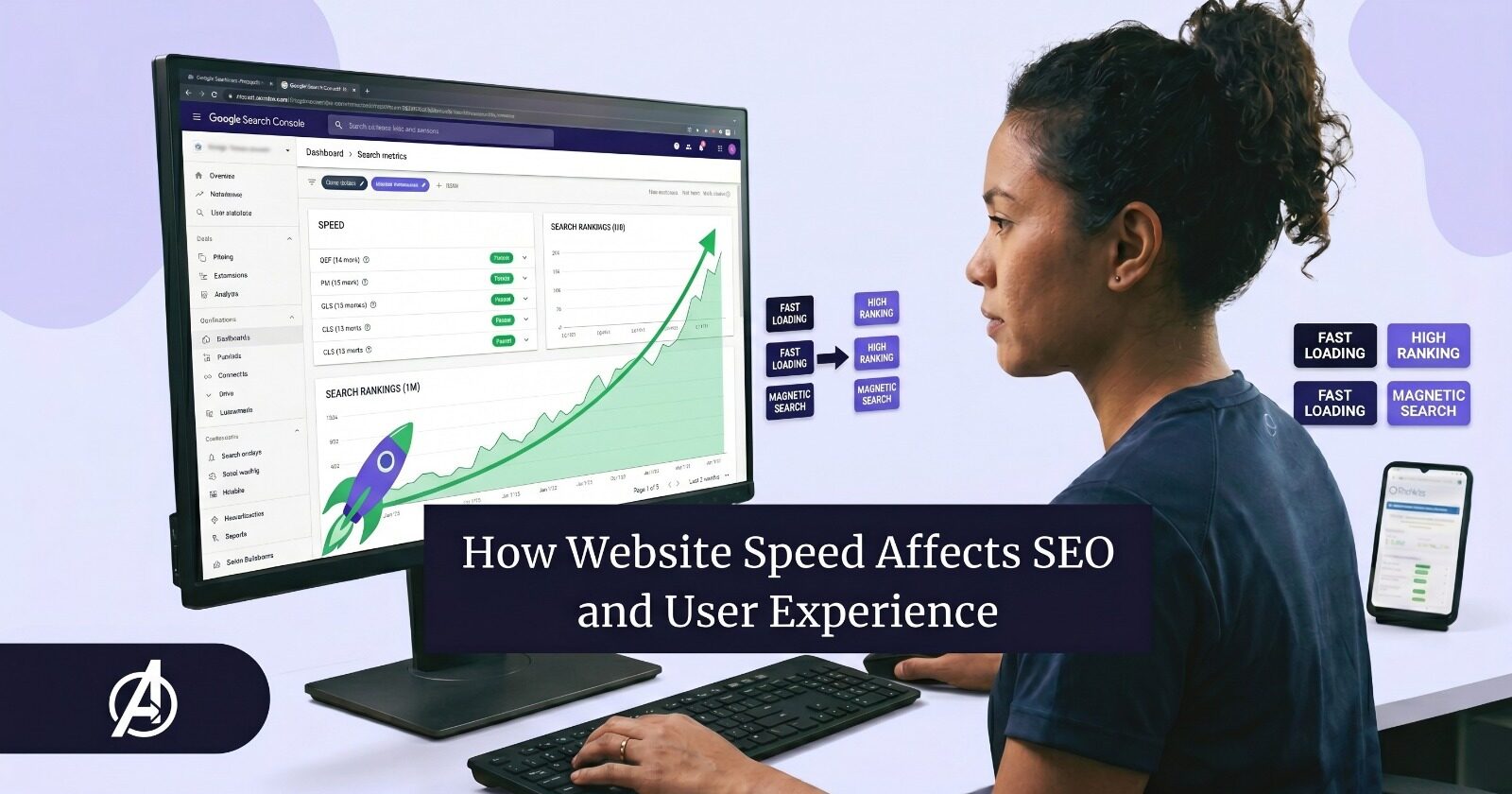
Faster websites often perform better in search results because page speed influences both user experience and search performance. In fact, visitors are more likely to stay on a site that loads quickly, while slow pages can increase abandonment rates and reduce engagement.
However, identifying the causes of poor output is not always easy. Many speed issues sit behind the scenes, which is why technical audits and performance testing play an important role in improving website speed.
In this article, you’ll learn how site speed connects to organic traffic, what search engines actually measure, and which technical fixes deliver the gains.
Read on to see exactly where your site might be losing ground.
How Website Speed Influences Your Google Rankings
Google uses page speed as a confirmed ranking factor, which means faster sites consistently outrank slower competitors (and this isn’t a minor signal). Sites that load slowly may experience lower engagement and reduced visibility compared with competitors that provide a faster experience.

The following two areas drive most of the impact:
Core Web Vitals: What Search Engines Actually Measure
Core Web Vitals provides three performance scores that Google uses to evaluate every page: loading speed, interactivity, and visual stability (think of it as Google’s report card for your site). Together, they give search engines a measurable way to compare your page against competitors.
Among these three metrics, loading speed often attracts the most attention because it directly affects how quickly visitors can access content. And Google measures this loading output through Largest Contentful Paint (LCP), which tracks how long it takes for the largest visible element on a page to load.
In practical terms, a poor LCP score indicates slow delivery to Google. Plus, pages with weak LCP scores see a direct drop in search results, often without the site owner knowing why.
Your Site’s Structure and Its Role in Search Results
Site architecture influences how efficiently search engines crawl and index a website. A logical, well-linked layout helps crawlers find important content and understand how different sections relate to one another.
In contrast, a poor site’s structure wastes crawl budget and makes it harder for crawlers to navigate a site effectively. Internal linking addresses this issue by connecting pages and tells Google which content deserves priority.
Based on our firsthand experience, websites with a clear structure are generally easier to maintain and adapt when search algorithms change.
Website Performance and the User Experience Connection
Have you ever wondered why visitors leave your site within seconds, even when your content is solid? In many cases, the reason is site speed. A slow website creates friction early in the user journey and can discourage visitors from exploring further.

Specifically, the impact shows up in two places:
Bounce Rates, Load Times, and Lost Conversions
According to Google’s mobile performance research, if page response time rises from 1 s to 3 s, bounce rates climb by over 32%. As visitors leave before a page fully engages them, businesses lose potential customers to generate enquiries, sales, and other conversions.
Smartphone users often feel these delays more acutely because they may be browsing on slower connections or smaller devices. As a result, poor screen results can contribute to higher abandonment rates and weaker search visibility.
What a Slow Site Costs You in Real Terms
A slow website can affect revenue, user engagement, and search visibility over time. And large businesses have measured these effects directly.
For instance, Amazon reported a 1% revenue loss for every 100 ms of added load time (and that’s just one data point from one company). Although smaller businesses operate on a different scale, the impact on SEO output still reduces conversions and limits opportunities.
Performance issues also influence how visitors interact with a website. Fewer return visits, shorter sessions, and lower engagement all affect long-term organic growth. When competitors provide a quick experience, maintaining visibility and attracting new customers through an online marketing plan becomes more challenging.
Technical SEO Services: What a Proven Agency Actually Delivers
A proven technical SEO agency focuses on issues such as slow page speeds, crawl errors, broken links, indexing problems, poor site architecture, and mobile usability concerns. Otherwise, these technical factors can affect how search engines access and evaluate your website.
The services below are some of the areas an experienced agency typically focuses on.
- Full Site Structure Review: Structural issues within your site’s layout can make it harder for Google to discover and understand important content. An SEO audit review helps to solve these problems that may affect crawlability.
- Local SEO Optimisation: For local businesses, speed, handheld performance, and local SEO signals often influence search visibility together. As a result, faster, well-structured sites tend to perform more consistently in local search results than slower competitors.
- A Proven Track Record: Not every seo agency delivers measurable outcomes. So, look for one with documented results across multiple industries rather than just case studies from a single niche. That evidence helps you assess whether the agency can apply proven processes to businesses with different goals.
- Ongoing Seo Services: Technical improvements aren’t a one-time job. Regular monitoring, fixing emerging issues, and refining page hierarchy keep your rankings stable as algorithms evolve.
Pro Tip: Before signing with any agency, ask specifically how they report on technical progress. Vague monthly reports are a red flag as they rarely show what actually moved your rankings.
Brisbane-based specialists like Matter Solutions run technical SEO audits using tools like Ahrefs, GTmetrix, andScreaming Frog. These audits surface crawl errors, broken links, and site architecture problems holding your rankings back. They also report your progress transparently.
Technical SEO Strategy: Fixing What Slows You Down
A focused SEO strategy improves search visibility while creating a smoother experience for visitors. But you’d be surprised how many websites underperform simply because no one touched technical issues for months or even years.
Technical SEO problems often cluster around a few recurring areas as follows:
Diagnosing What’s Actually Slowing You Down
The most common performance problems that drag your load times down are:
- Server response issues
- Render-blocking resources
- Uncompressed images
In practice, speed optimisation starts with identifying these problems accurately. But the challenge is that those issues rarely come from a single source. Several small technical problems can combine to slow a website down, which makes accurate diagnosis an important first step.
And once technical audits identify the underlying causes, optimisation efforts become far more manageable.
Building a Fix Priority Order
A solid SEO strategy doesn’t treat every issue equally. It ranks fixes by their impact on both search engine performance and user experience.
Follow this checklist to understand how you should prioritise technical issues.
| Priority | Issue | Impact |
| High | Site speed and page response time | Direct effect on search rankings and user experience |
| High | Crawl errors and broken links | Blocks search engine crawlers from indexing important pages |
| Medium | Browser caching | Reduces repeat load times without large-scale site changes |
| Medium | Mobile usability gaps | Affects smartphone friendliness and search visibility |
| Low | Structured data gaps | Improves how search engines read and display content |
This way, tackling high-impact fixes first means SEO efforts produce visible results quickly, rather than spreading resources thin across minor issues.
Using the Right Diagnostic Tools
Technical SEO experts rely on a focused set of tools to measure your website’s output. Each one surfaces a different layer of site issues.
- Google Search Console: Flags crawl errors, mobile usability gaps, and indexation issues in one place.
- PageSpeed Insights: Measures page speed and Core Web Vitals scores for both small-screen and desktop.
- GTmetrix: Breaks down response time into a detailed waterfall view, which shows precisely where your site stalls during loading.
A clear diagnostic picture from these tools shows exactly where fixing technical issues will deliver the most measurable gains.
Is Your Site Ready? What Technical SEO Experts Look For
SEO experts look for speed bottlenecks, crawlability issues, and mobile performance gaps that slowly drag down your rankings. Through our hands-on experience, the sites that improve quickly are the ones that prioritise small-screen load times first.
A comprehensive technical SEO audit covers the following ground before anything else:
| Area to Check | What It Affects |
| Page speed | Search engine rankings and user satisfaction |
| Mobile optimisation | Mobile friendliness and search visibility |
| Site architecture | Search engines’ crawl efficiency and crawl budget optimisation |
| Internal linking | Google can index important pages properly. |
| Site health | Fixing crawl errors and broken links |
| Structured data | How search algorithms read and display your content |
Ongoing technical SEO support keeps these foundations solid as your site grows, so organic traffic builds consistently rather than fluctuating with every algorithm update.
Your Site’s Speed Is Either Working For You or Against You
Website speed and technical SEO work together as part of a broader digital marketing strategy. A fast, well-structured site builds search engine results over time and brings qualified leads.
Integrating SEO into your web development process from the start saves significant time and money. Sites that incorporate technical elements during development often achieve stronger search performance and provide a better user experience.