
Building a web application is one of the most important investments companies make when launching digital products or improving internal operations. Web applications serve as essential tools for businesses which use them to control their operational processes while providing customer services and building their digital infrastructure.
Companies usually start their project development work with a professional web application development services provider because they recognize the value of those services. When an architectural design goes hayque. you and I will be able to offer credible budget information on which works will ensure there is sufficient capacity for the application to handle additional users as may come in future.
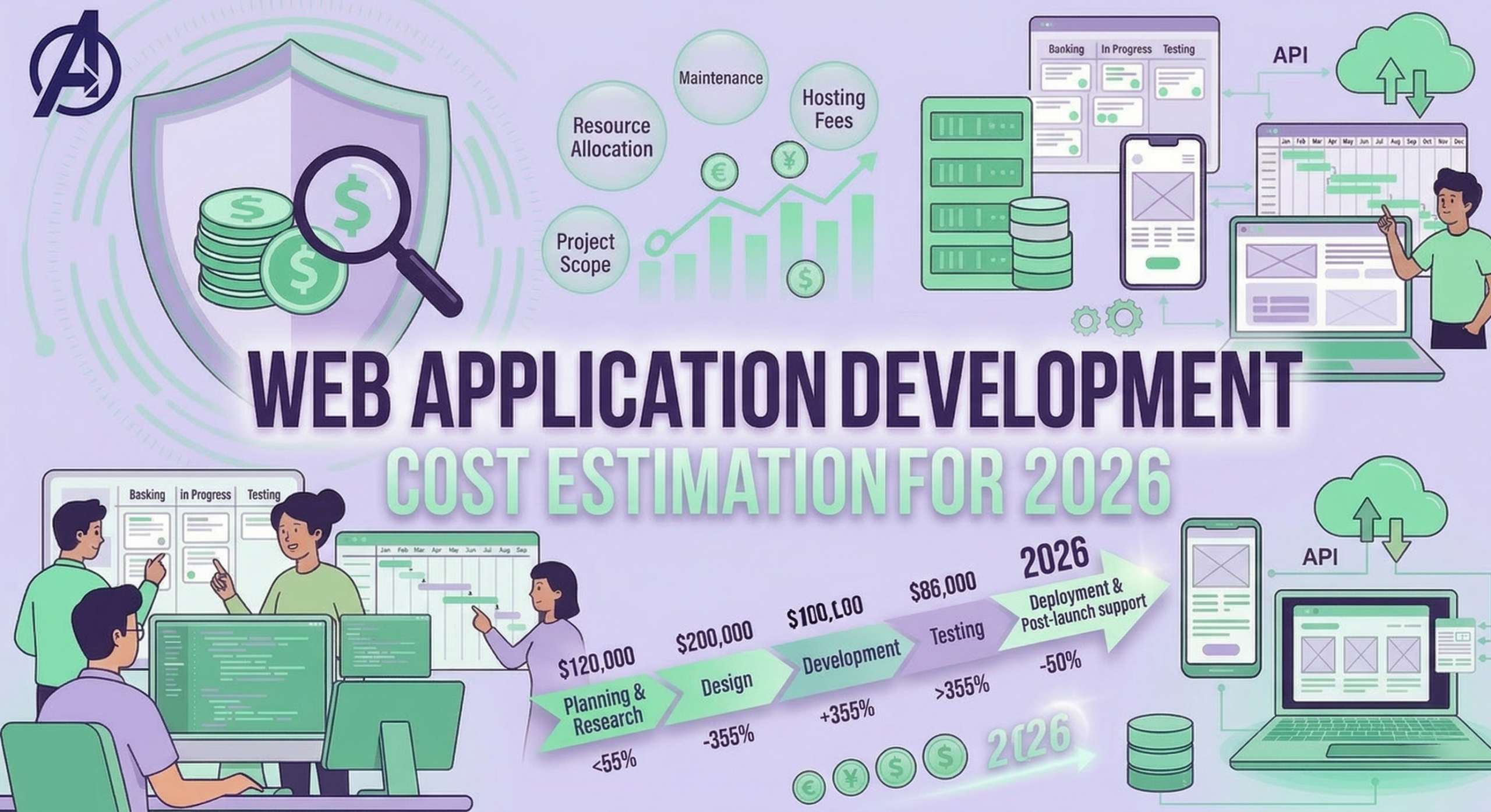
The expense for developing web applications in 2026 ranges from $30,000 for basic applications to over $300,000 for advanced enterprise systems. The final cost depends on the complexity of the product, the number of features required, development timelines, and the technologies used.
The elements Companies need to understand will help their operations because these elements enable them to create accurate budget predictions while decreasing their unplanned development expenses.
Why Cost Estimation Matters in Web Development
The success of digital product development depends on accurate cost estimation. The lack of a financial plan prevents companies from estimating their development needs while unexpected technical issues result in project delays.
Proper cost estimation helps organizations:
- develop a priority list for essential product components
- distribute engineering resources in an effective manner
- create development schedules that match actual project needs
- financial risks during project execution are reduced through this method
Companies use clear budget planning to select development strategies that match their business objectives.
Key Factors That Influence Web Application Development Costs
The cost of developing a web application depends on various technical and strategic elements which determine project costs. The overall project budget needs to be evaluated because each project demands different requirements.
Application Complexity
Application complexity is one of the main factors that influence development cost.
A simple application with basic functionality requires fewer development hours than a complex platform with advanced data processing and integrations.
The typical cost ranges for web applications and web applications with different complexity levels and enterprise platforms are as follows.
- Simple web application costs range from $30,000 to $60,000.
- The development cost for applications with medium complexity starts at $60,000 and reaches up to $150,000.
- The development cost for complex enterprise platforms starts at $150,000 and exceeds $300,000.
Complex platforms usually include advanced dashboards, payment systems, automation workflows, or real-time data processing.
Feature Set and Functionality
The application development expenses determine development costs according to the number of features that developers decide to include in their application.
Every feature demands more work because it requires designers and coders and testers to complete the design and coding and integration and testing processes.
Web applications typically include these standard features:
- user registration and authentication
- dashboards and administrative panels
- payment processing systems
- messaging and notification systems
- analytics and reporting tools
- integrations with third-party services
Most companies use Minimum Viable Product (MVP) launches to lower their development expenses because they will test their product concept before developing more features.
Technology Stack
The total expenses for the application development process depend on which technology stack developers select to implement. The development process requires different time durations based on development technologies which demand specialized engineering knowledge. The following technologies represent standard tools which developers use to create web applications:
The field of web development uses
- React
- Angular
- Vue.js
Frontend technologies
- Node.js
- Python (Django or Flask)
- Java
- .NET
Backend technologies
- PostgreSQL
- MongoDB
- MySQL
The following cloud infrastructure services
- Amazon Web Services (AWS)
- Google Cloud Platform
- Microsoft Azure
Choosing the right technology stack ensures that the application remains scalable and maintainable as the business grows.
UI and UX Design
The user interface together with user experience design methods will impact the total development expenses. The design process for a basic interface needs fewer resources than the advanced user interface design which demands extra research work and testing procedures and interaction design development.
The following items contribute to design-related expenses: UX research wireframing interface design usability testing responsive design optimization. The presence of effective interface design elements leads to better product adoption results and increases user engagement with the product.
Development Team Location
Development costs vary depending on the geographical location of the engineering team.
The average hourly rates typically fall within the following ranges:
- North America: $100 to $200 per hour
- Western Europe: $80 to $150 per hour
- Eastern Europe: $40 to $80 per hour
- Asia: $25 to $60 per hour
Many businesses choose to use distributed development teams or outsourcing partners because they want to achieve both cost efficiency and high development quality.
Integration Requirements
Modern web applications design their operations to function as part of connected systems rather than working in isolation. Most platforms establish connections to multiple external services and their own internal business applications.
Common integrations include:
- payment gateways
- CRM systems
- ERP platforms
- cloud storage solutions
- analytics platforms
The project expenses increase because every integration needs extra time for development work and testing procedures.
Hidden Costs Businesses Often Overlook
The development budget receives primary attention from companies because they need to manage additional expenses which emerge throughout a web application’s operational existence.
The typical hidden costs of web applications include the following expenses:
Infrastructure costs
Cloud-based hosting, storage, and networking resources, year after year, fetch operational expenses.
Security implementation
Incorporating security audits, penetration testing, and compliance requirements takes additional time.
Maintenance and updates
This is because users do not bother about updating, if an application developer pushes an update to the app store.
Scaling infrastructure
The system needs performance upgrades and server upgrades because of increasing user traffic.
Businesses need to track their expenses from the beginning because this method protects them from future financial difficulties.
Typical Development Timelines
Development timelines depend on the web application’s complexity and the number of features that need to be developed.
Typical project timelines include:
- Simple web application: 2–4 months
- Medium complexity application: 4–8 months
- Complex enterprise platform: 8–12 months or longer
Agile development methods enable teams to deliver product features in small increments while they keep working on system enhancements.
Strategies to Reduce Web Application Development Costs
The strategic options aimed at capping ad spend are in the hands of big business houses.
Start with a Minimum Viable Product
A minimum-viable version of the app/website works like a charm at validating business ideas before any capital is invested on full-fledged design and development activities.
Prioritize core features
Concentrate development resources on features that deliver maximum value to the users.
Design scalable architecture
One should always opt for flexible architectures to avoid costly system refinements later.
Work with experienced development teams
Experienced engineers can prevent architectural mistakes and improve development efficiency. The strategies enable businesses to achieve development cost balance while their product quality remains intact.
Conclusion
The assessment of web application development costs for 2026 requires the analysis of various crucial factors which include application complexity and technology stack and feature requirements and development team structure.
The cost of smaller applications starts at approximately $30000 whereas complex enterprise platforms will exceed $300000 when they require advanced integrations and large-scale infrastructure.
The organizations that use development methods through strategic planning and realistic budget development and cooperation with skilled development teams will achieve successful web applications which can grow in scale.