AI search optimization changes the game for DTC content. A shopper may still search Google, read reviews, compare products on Amazon, and visit a brand’s website. But they may also ask an AI tool which option fits their routine, budget, concern, or use case.
That puts more pressure on the content around the product. Any old blog post can answer one question, but the best content anticipates and answers the next question, and the next, and the next.
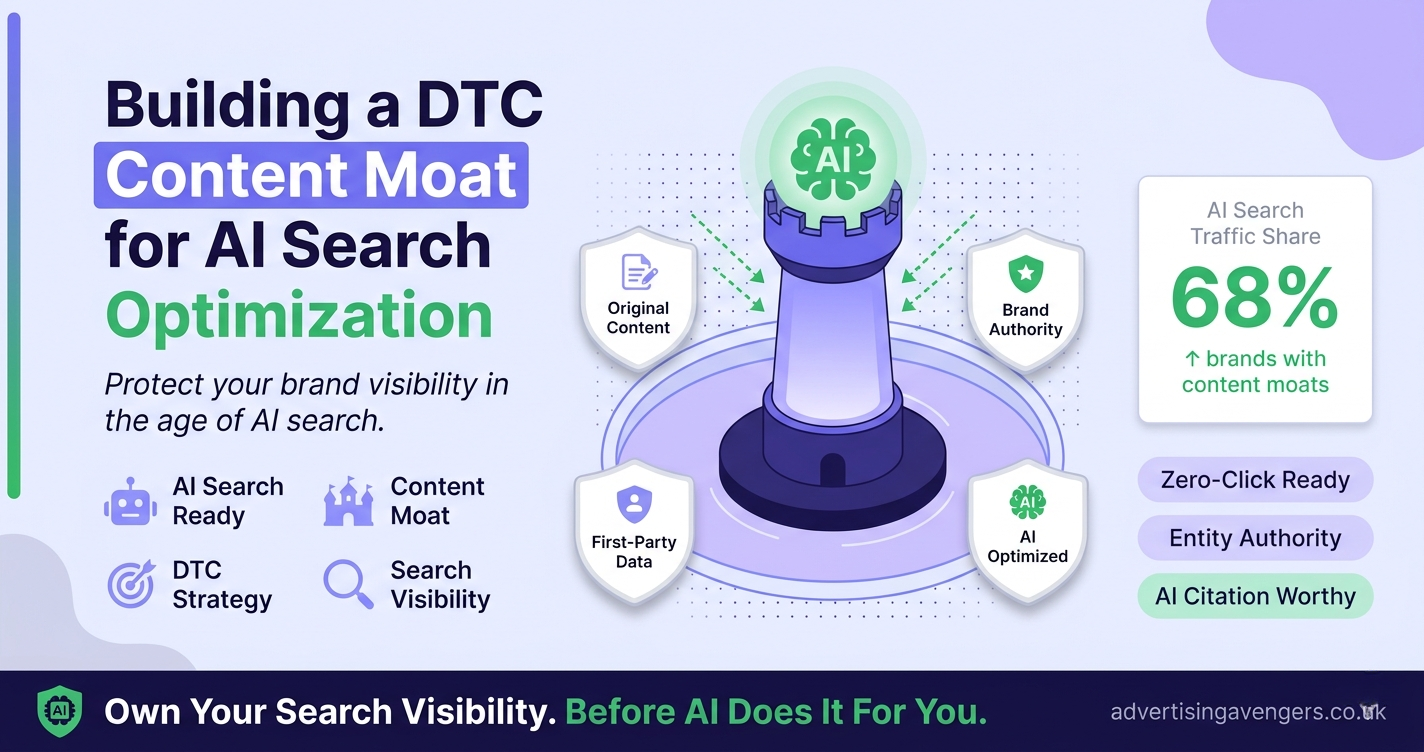
A DTC content moat is a connected group of pages that answers the real questions buyers ask before, during, and after a purchase. When those pages work together, the brand becomes easier for shoppers to trust and easier for AI systems to cite.
A strong content moat also requires consistent link building to signal authority across AI and traditional search engines.
The Content Moat Is the Part of SEO Competitors Cannot Copy Quickly
A content moat in SEO is a system of pages that makes a brand harder to replace in search. The strength doesn’t come from the sheer volume of posts in that category, but how well those pages cover the category.
For a DTC brand, that might include a category guide, a few comparison pages, use-case articles, FAQs, product education, care instructions, and post-purchase support. The important part is how the pages work together.
Take a DTC protein snack brand, for example. A category guide might explain how to choose a bar for a commute, a workout, or a school lunch. A comparison page might explain bars vs powders. A FAQ can answer the last question someone might have before they decide to purchase, like whether the bar will melt in a hot car or contains a common allergen.
Google’s Search Central guidance for AI search experiences advises site owners to focus on unique, helpful content for visitors while making sure pages are accessible, structured, and easy to use. For DTC brands, that means the best pages should be clear enough for shoppers and organized enough for AI systems to interpret.
The weak spot for many ecommerce brands is content isolation. A useful page that leads nowhere can still leave the buyer unsure what to do next.
Active Blogs Can Still Leave Big Content Gaps
Many DTC blogs give the appearance of activity. They can have posts on trends, gift guides, product education content, and seasonal pieces that all rank. But if there’s no throughline connecting those pages, that’s a problem.
A buyer reads one post, but there’s no clear next page that answers the comparison question. Another buyer reaches a product page, but the category guide never explains why one product type is different from another option.
A protein snack brand might have a blog post about healthy workday snacks, a product page for a high-protein bar, and an FAQ about sugar alcohols. If those pages don’t revolve around the same buyer concern, the shopper has to do all that work.
A better setup would connect the workday snack article to a comparison page about bars vs shakes, then to a FAQ about ingredients, then to the product page that fits the routine. This guides the shopper through the purchase decision without pushing them.
The most valuable FAQ strategy answers the small questions that might slow a shopper down. A buyer unsure about ingredients, sizing, shipping, subscriptions, or product fit often needs one direct answer before moving forward, which is why strong DTC content systems often include FAQ strategy as part of the larger moat.
Category Authority Starts Before the Buyer Has a Product in Mind
Category authority begins when the shopper is still trying to name the problem. They don’t know which product to buy yet, and may not even know the type of product they need.
Let’s continue with the protein snack brand example. Early questions might be straightforward. Is a bar better before or after a workout? What makes a snack filling? Why do some bars upset your stomach? How much protein is enough for an afternoon snack?
Those pages should help the shopper sort the category before recommending a product. That early help can shape the rest of the search.
A shopper who saves a buying guide, returns through a branded search, or clicks from a guide into a comparison page is already moving closer to the brand. That’s exactly the behavior moats are built to support.
Comparison Hubs Should Answer the Questions Shoppers Are Already Asking
DTC shoppers compare ingredients, price tiers, bundles, subscriptions, delivery options, reviews, return policies, and places to buy.
A good comparison hub consolidates those decisions into one place. For a protein snack brand, that might mean pages comparing bars vs powders, whey vs plant-based protein, subscription vs one-time purchase, and buying direct vs buying through a marketplace.
AI assistants break pages into smaller structured pieces, then check those pieces for authority and relevance. When each section can stand on its own, answering one decision clearly, comparison pages help with AI search optimization.
Channel comparison is often part of that decision. Some shoppers want marketplace reviews before they trust a product, while others want deeper education from the brand’s own site. A comparison hub can explain how a marketplace and owned-site strategy can support both behaviors.
The best comparison pages are honest about fit. A product doesn’t need to be right for every buyer.
Use-Case Clusters Bring the Product Into the Buyer’s Day
Specific situations trigger shoppers to search for products. Usually, those shoppers don’t have a specific product name in mind.
Instead of that product name, they might look for a snack that works for long commutes, or moisturizers that don’t feel heavy in August. All these searches stem from ordinary, everyday problems.
For the protein snack brand, use-case pages might cover what to pack for a 7 a.m. train ride, what to keep in a desk drawer, or what to eat between school pickup and dinner. Those pages can lead to a comparison guide, an ingredient FAQ, or a product page that fits the need.
This also gives AI systems more context. A page about “best protein snack for a long commute” says something different than a general protein bar page. It shows where the product fits in a buyer’s life.
Evergreen DTC Content Starts With Questions That Keep Coming Back
Evergreen content works when the core question stays useful. The examples may change, and the product details may need updates, but the buyer need persists.
A durable page might explain how to choose between two product types, how to use a product correctly, how to care for it after purchase, or what a buyer should expect once the order arrives. The examples and copy might need periodic updates, but none of those questions will expire anytime soon.
Use a question map to kickstart the planning process:
- What does the buyer ask before they know the product type?
- What does the buyer compare before choosing a brand?
- What concern slows the purchase down?
- What does the buyer need after the order arrives?
- Which answers deserve their own page instead of a short FAQ?
This keeps the content plan from turning into a list of random topics. It also helps the brand see which questions are missing from the site.
Map the Funnel by Buyer Questions, Not Only Keywords
Keywords still have a place, but a moat is easier to build when the team starts with questions.
At the top of the funnel, buyers ask what something is and why people use it. For the protein snack brand, that might mean questions about protein amounts, sugar content, digestion, and snack timing.
In the middle, they compare materials, features, ingredients, pricing, and brand claims. Near purchase, they ask which product fits their exact need and where they should buy it.
Post-purchase questions deserve a place in the map as well. Buyers may need help storing the product, building it into a routine, reordering it, or choosing a different flavor next time.
Those questions are often overlooked because they don’t always look like acquisition content. They can still reduce returns, improve satisfaction, and provide AI systems more complete information about the product category.
FAQ Sections Work Best When They Answer One Question at a Time
FAQ content can support AI search optimization when it gives a clear answer first and useful detail second.
Each question should answer one real buyer concern. The first sentence should work on its own. The next few sentences can add context, limitations, or a link to a deeper page.
Q&A formats mirror how people search and can be easier for assistants to reuse in AI-generated answers. But that doesn’t mean every single page needs a gigantic FAQ block.
For the protein snack brand, a useful FAQ might answer whether the bars need refrigeration, how long they can stay in a backpack, or whether a variety pack is better for first-time buyers. Instead of repeating obvious claims, they guide the buyer further through the funnel.
FAQ: DTC Content Moats and AI Search Optimization
What is a content moat in SEO?
A content moat in SEO is a connected group of pages that builds authority around a topic and makes a brand harder to replace in search. For DTC brands, that moat often includes category guides, comparison pages, use-case content, FAQs, and product education.
How do I make evergreen content for my DTC brand?
Evergreen DTC content starts with buyer questions that stay useful over time. A brand can build from definitions, buying guides, comparison pages, usage content, care instructions, and post-purchase support.
Why does AI search change DTC content strategy?
AI search changes DTC content strategy because answer engines often look for clear, structured, self-contained information. A product page may answer what the item is, while a category guide, comparison page, and FAQ explain why it fits a buyer’s need.
What pages should a DTC content moat include?
A DTC content moat should include category education, comparison hubs, use-case pages, FAQ sections, product education, and support content. A beauty brand may need more routine and ingredient pages, while a snack brand may need more ingredient, timing, storage, and use-case pages.
How long does it take to build a content moat?
A content moat usually takes months to build because the work includes planning, publishing, internal linking, updating, and measuring search behavior. The first pages can help quickly, but the moat gets stronger and stronger as more content gets added.
The Pages That Usually Make the Difference
A DTC brand does not need every possible page at once, just the missing pages that keep shoppers from moving forward.
For the protein snack brand, the first missing page may not be a broad blog post. It may be a comparison page for bars vs shakes, a use-case page for long commutes, or a short FAQ that answers whether the product can sit in a gym bag all afternoon.
That’s where AI search optimization and buyer trust start to overlap. The more clearly a brand answers the real questions around its category, the fewer gaps shoppers have to fill on their own.