
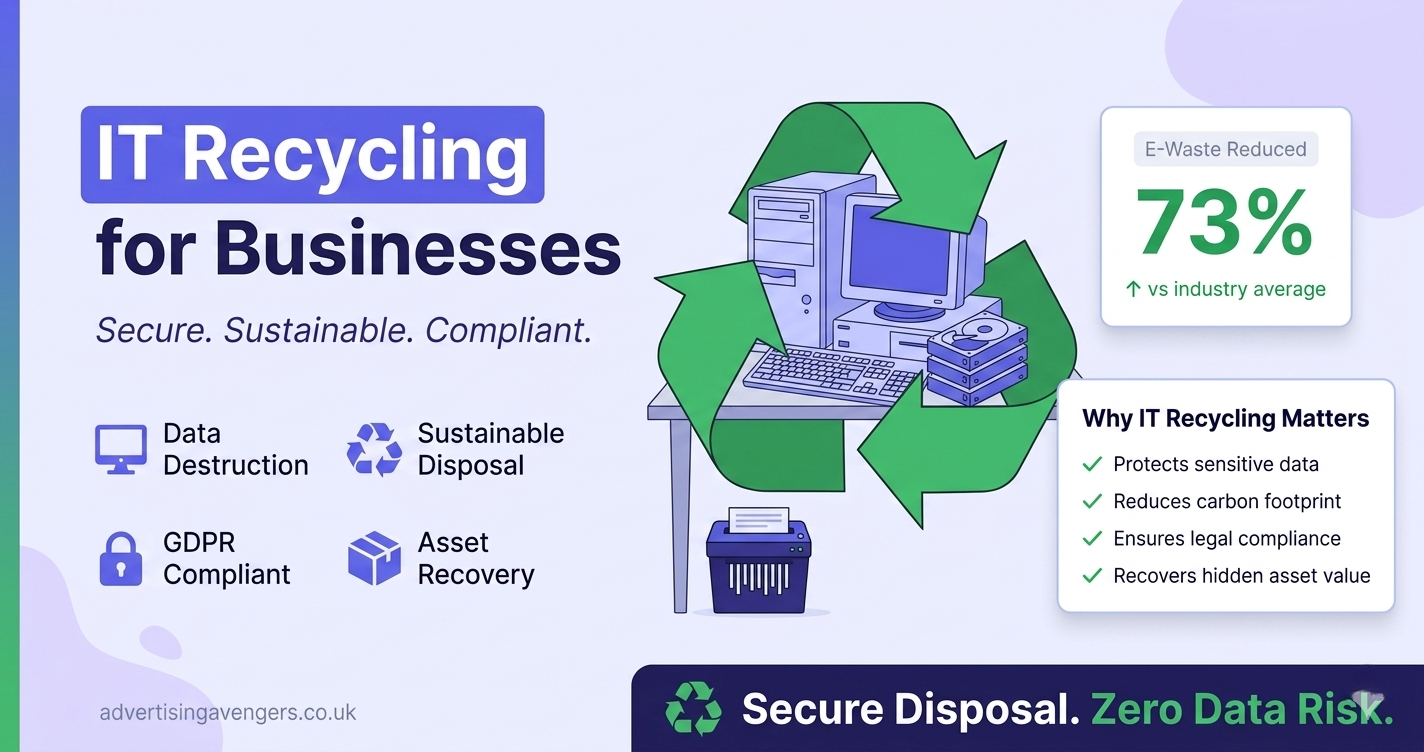
IT recycling for businesses is increasingly crucial in a world where companies depend on a growing fleet of devices and digital infrastructure. Without careful management, retired IT assets can become an overlooked source of data breaches or environmental concern. Developing effective procedures for safe and sustainable IT recycling directly supports business security, compliance obligations, and sustainability goals.
As organisations accumulate computers, servers, and networking gear, safely retiring or replacing these assets is a challenge that carries both risk and responsibility. IT Recycling must go beyond simply removing old hardware; it requires safeguards to ensure that company and customer data does not persist and that equipment is disposed of or redeployed in environmentally sound ways. Businesses of all sizes must adopt clear strategies for asset auditing, data erasure, and compliance when managing surplus or outdated hardware as part of the IT lifecycle.
Identifying and tracking business IT assets
Effective IT recycling for businesses begins with the accurate identification and tracking of all technology assets. Maintaining a detailed inventory helps organisations understand what devices exist, their current usage, and when they will be due for replacement or decommissioning. This process supports risk reduction by ensuring no asset is forgotten or overlooked during the transition to recycling or secure disposal.
Proper tracking extends into the lifecycle of the device, making it easier to assign responsibility for each asset and align actions with company policies. This visibility is fundamental for both compliance and operational efficiency, enabling businesses to plan ahead for secure data removal, environmentally responsible recycling, or suitable repurposing of hardware as needs evolve.
Implementing a comprehensive asset management system allows businesses to monitor the complete journey of each device from procurement through to end-of-life. Modern tracking solutions can include barcode scanning, RFID tagging, or cloud-based databases that capture critical information such as purchase dates, warranty periods, assigned users, and maintenance history. This level of detail not only streamlines the recycling process but also helps organisations identify patterns in device longevity and performance, informing smarter purchasing decisions and budget planning for future technology investments.
Beyond simple inventory management, businesses should establish clear protocols for asset classification based on sensitivity levels and data types. Different categories of equipment may require varying levels of security during disposal, with devices that handled financial data or personal information requiring more stringent erasure processes than basic peripherals. Creating a tiered approach to asset tracking enables organisations to allocate resources efficiently, focusing intensive security measures on high-risk devices while streamlining processes for lower-risk equipment. This classification system should be integrated into the asset management database, automatically flagging devices for appropriate handling procedures as they approach end-of-life status.
Ensuring data security and regulatory compliance
During IT recycling, safeguarding sensitive data is a primary concern for businesses. Many devices contain confidential files, customer records, or intellectual property that can remain recoverable if not thoroughly erased. Secure data destruction protocols, such as physical destruction, cryptographic erasure, or certified overwriting, are necessary steps before hardware leaves the company’s control.
Regulations often demand demonstrable evidence that data has been handled securely throughout the recycling process. Businesses must keep clear documentation of data sanitisation efforts and establish audit trails showing the fate of every asset. These measures help satisfy legal requirements, protect against data breaches, and support business credibility with stakeholders and customers alike.
Beyond basic data wiping, businesses should establish multi-layered security protocols that include verification and certification at each stage of the disposal process. This may involve obtaining certificates of destruction, conducting random audits of sanitised devices, and maintaining chain-of-custody documentation that tracks every individual who handled the equipment. Industry standards such as NIST guidelines or GDPR requirements often specify the level of data sanitisation needed, and failure to meet these benchmarks can result in significant financial penalties and reputational damage that far exceeds the cost of implementing proper security measures from the outset.
Choosing trustworthy recycling partners and promoting sustainability
Businesses benefit from partnering with reputable organisations specialising in IT recycling. The right partners provide certified processes, traceability for each asset, and robust environmental practices that align with corporate sustainability goals. Trustworthy recyclers not only reduce the risk of data leaks but also help companies to responsibly manage the environmental impact of electronic waste by ensuring safe reuse or material recovery when possible.
Collaborating with providers such as Circular IT group can help businesses streamline recycling efforts and validate their commitment to secure, sustainable asset management. By prioritising transparency and responsible partnerships, companies improve their operational resilience and demonstrate ongoing stewardship over sensitive data and valuable hardware throughout the recycling process.
When evaluating potential recycling partners, businesses should look for certifications such as R2 (Responsible Recycling), e-Stewards, or ISO 14001, which demonstrate adherence to recognised environmental and security standards. A quality recycling partner will provide detailed reporting on how assets are processed, including the percentage of materials recovered, methods used for data destruction, and the final destination of components that cannot be reused. This transparency enables companies to accurately report on their environmental impact, support circular economy initiatives, and communicate their sustainability achievements to investors, customers, and regulatory bodies with confidence and verifiable metrics.